Celebrity Health – Mick Kelly
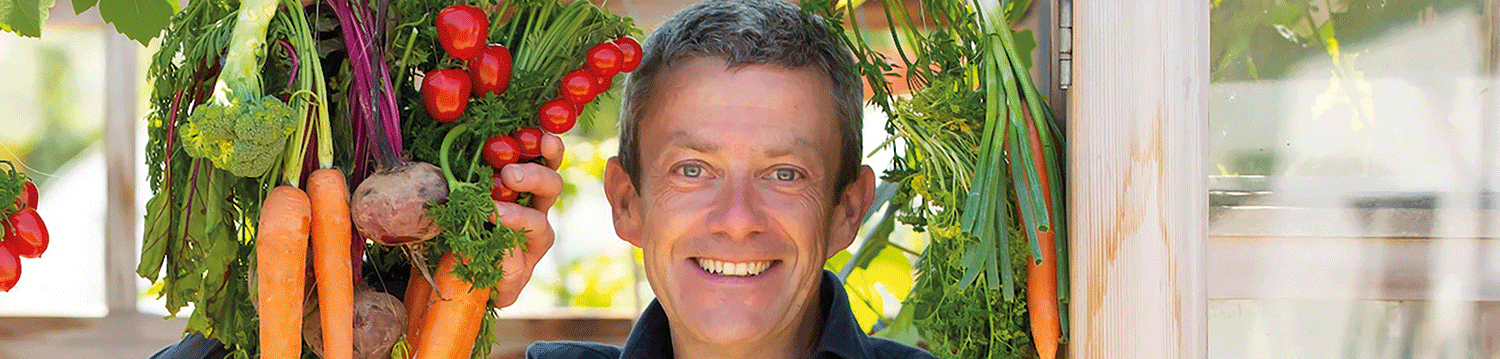
Photography © Mark Boland, Sceal Creative
TV presenter, author and founder of Grow It Yourself, Mick Kelly is on a mission to reconnect people with real food. GIY is an international movement that encourages people to grow their own food, while also working to improve food education through schools and community programmes. Mick co-presented and produced Grow, Cook, Eat for RTÉ as well as Food Matters on RTÉ One. His latest TV series, Our Farm: A GIY Story, which premiered on RTÉ One, followed the transformation of a derelict walled garden at Curraghmore Estate in Co Waterford into a full-scale, working regenerative farm.
What were some of the biggest hurdles you had to overcome during the project?
When I think back, it was kind of a year of two halves. In the first half of the year, the challenge was trying to get enough produce. I think a lot of people aren’t necessarily aware that your first new season crops don’t really kick in until late May. So April and May are very lean. We had more customers than we had produce in the first half of the year.
Then it’s like you flick a switch in June and suddenly you’ve got vast quantities coming off the land, and we didn’t have enough customers. So we were really scrambling to build a customer base. It was really hard, and honestly it was touch and go for a while whether it would survive at all.
What was the most enjoyable aspect of working on the project and the TV series?
When you have a load of produce coming off the land that’s such high quality, and the feedback from customers is amazing, that’s incredibly gratifying. And it’s not too much of a spoiler to say that it came good in the end in terms of customers. By October or November, there was a real sense that it was working and that we were building a loyal customer base. After such a difficult year, that was incredibly gratifying.
There’s currently a decline in the number of vegetable growers in Ireland. What does that mean for the food we’re eating and our health?
We’ve only got 73 commercial veg growers left in Ireland. For context, that’s down from about 600 at the turn of the century. It really is collapsing in front of our eyes. We’re incredibly reliant on imports; up to 85% of the fruit and veg we eat is imported. That’s fine until there’s a major shock to the system.
I think we have an illusion of food security in Ireland because we produce so much for export, mainly beef and dairy. But when it comes to this really important part of the national plate, we’re very vulnerable. And even leaving aside shortages, I think we’re getting a worse product as consumers. You’re getting produce shipped from the other side of the world, which is not particularly fresh or nutrient-dense.
Ultra-processed foods now make up a huge part of the average shopping basket. Why do you think they’ve become so dominant?
There are a few reasons. The global food companies that produce these foods are very powerful and spend billions on advertising. They’re also engineered to be hyper-palatable and addictive. And finally, they’re cheap. For people on a budget, very cheap calories are available. Unfortunately, they’re also really bad for you. There’s a cost down the line in terms of health. We’re only beginning to see the impact of that now, with rising chronic diet-related illnesses, particularly in younger people.
Do you have any tips for people who would like to start growing their own produce?
Start with things that grow quickly, like salad leaves, so you get a quick return. You can do a huge amount in pots, window boxes or on a balcony. Herbs are a great option. You can haves omething like mint or rosemary that lasts for years with very little effort. It’s a great teacher – about food, about seasonality, and about what real food should taste like. Even if you’re only growing 1% of what you eat, it’s incredibly valuable.
What kinds of foods do you like to grow and cook yourself?
I’m an equal opportunities grower. I grow 50 or 60 different types of vegetables every year, not all very well. I don’t have a horticulture background, so I’m still learning. But I love it. I get such a kick out of going into the garden and picking something fresh to eat. This morning I harvested some chard leaves, cooked them in a pan and put a poached egg on top. At a time when things can feel pretty grim, it’s my happy place – connecting to food, the soil and nature. It’s a marvellous thing.
Are there any simple habits you try to stick to when it comes to looking after your health?
I’m quite disciplined, and routine is important to me. I have a busy family and work life, but there are two non-negotiables. The first is good, healthy food, hopefully three times a day. I’m not perfect, but I try to keep 90% of what I eat really wholesome. The second is my morning routine. I have about an hour before the house wakes up where I do some yoga, a bit of meditation, and read something positive. It sets me up for the day.
Do you ever shop in independent health food stores?
Yes, I do. I think the priority should always be getting nutrition from your diet, but health food shops can really support that. They’re a great place to access things like whole foods, healthy grains and better snacks. I also think it’s important for people to get out there and support independent healthfood stores because supermarkets try to dominate that space.
What do you hope that viewers will take away from your latest TV show?
We want people to see what goes on behind the scenes with a small farm trying to bring local, seasonal, whole foods grown in living soil to customers, and to see the real power and influence they have with their food choices. We also want to show that eating seasonally isn’t about sacrifice; it can actually be more affordable, healthier and more satisfying than people expect.
To find out more, watch Our Farm: A GIY Story on RTÉ Player and visit GIY.ie
More celebrity health articles...
Articles from our latest issue...